Friday, 11 March 2022

The Great Gatsby

Here is my blog on The Great Gatsby written by F.scott Fitzgerald our professor asked me to write the blog with reference to the Film The Great Gatsby. so, here is my view on movie screening with reference to The original Text.

Who is Gatsby?

Jay Gatsby originally named James Gatz is the titular fictional character of F. Scott Fitzgerald's 1925 novel The Great Gatsby. Fitzgerald based many details about the fictional character on Max Gerlach, a mysterious neighbor, and World War I veteran whom the author met while living on Long Island near New York City during the raucous Jazz Age. Like Gerlach, Gatsby is an enigmatic nouveau riche millionaire who lives in a luxurious mansion where he often hosts extravagant parties and who gained his vast fortune by illicit bootlegging during prohibition in the United States.

The character of Jay Gatsby has been analyzed by scholars for many decades and has given rise to a number of critical interpretations. Scholars have posited that Gatsby functions as a cipher because of his obscure origins, his unclear religio-ethnic identity, and his indeterminate class status. Accordingly, Gatsby's socio-economic ascent is deemed a threat by other characters in the novel not only due to his status as nouveau riche but because he is perceived as a societal outsider. The character's biographical details indicate his family is recent immigrants which preclude Gatsby from the status of an Old Stock American. As the embodiment of "latest America", Gatsby's rise triggers status anxieties typical of the 1920s era, involving xenophobia and anti-immigrant sentiment.

A century after the novel's publication, Gatsby has become a cultural touchstone in 20th century America and is often evoked in popular media in the context of the American Dream—the belief that every individual, regardless of their origins, may seek and achieve their desired goals, "be they political, monetary, or social. It is the literary expression of the concept of America: The land of opportunity".Gatsby has been described by literary scholars as a false prophet of the American dream as pursuing the dream often results in dissatisfaction for those who chase it, owing to its unattainability.


 The Great Gatsby is a 2013 historical romantic drama film based on F. Scott Fitzgerald's 1925 novel of the same name. The film was co-written and directed by Baz Luhrmann and stars Leonardo DiCaprio, Tobey Maguire, Carey Mulligan, Joel Edgerton, Isla Fisher, Jason Clarke, and Elizabeth Debicki. Jay-Z served as executive producer. Filming took place from September to December 2011 in Australia, with a $105 million net production budget. The film follows the life and times of millionaire Jay Gatsby and his neighbor Nick Carraway, who recounts his encounter with Gatsby at the height of the Roaring Twenties on Long Island.

The film was highly polarizing among critics; it received both praise and criticism for its acting performances, soundtrack, visual style, direction, and faithfulness to the source material. Audiences responded more positively and Fitzgerald's granddaughter praised the film, stating "Scott would have been proud."As of 2017, it is Luhrmann's highest-grossing film, grossing over $353 million worldwide. At the 86th Academy Awards, the film won in both of its nominated categories: Best Production Design and Best Costume Design.

The Cast 

Leonardo DiCaprio 

Tobey Maguire 

Carey Mulligan

Joel Edgerton 

Elizabeth Debicki

Isla Fisher

Jason Clarke 

Amitabh Bachchan


The Jazz Age 

Scott Fitzgerald termed the 1920s "the Jazz Age." With its earthy rhythms, fast beat, and improvisational style, jazz symbolized the decade's spirit of liberation. At the same time, new dance styles arose, involving spontaneous bodily movements and closer physical contact between partners. The Jazz Age in the United States was in the 1920s and is defined as when the influence of jazz music was widespread and society was experiencing prosperity, Prohibition, and the beginnings of social change. An example of the Jazz Age is flapper girls.
Its themes of decadence, idealism, resistance to change, social upheaval, excess, and absurdity are often used to describe the Jazz Age and American culture in general, particularly the American Dream.


The presence of jazz in his other works, perhaps most iconically in his grand novel The Great Gatsby, linked the term even more tightly to his name. Today, the moniker “Jazz Age” has come to signify, as a kind of evocative shorthand, the 1920s in both academic and pop culture.
Pictures of Jazz Age from the Great Gatsby 


Fitzgerald’s embrace of jazz, then, was both an acceptance of popular music and a rejection of these racist critiques. Although the word “jazz” only appears a few times in the Great Gatsby, the music itself is ever-present; when music is playing in the background, Fitzgerald frequently refers to saxophones and horns, iconic instruments of the genre. Because of how organically omnipresent jazz is in Fitzgerald’s novel, virtually all later depictions of the book feature roaring jazzy orchestras as a way of capturing the book’s atmosphere, from film adaptations to the by-now-common phenomenon of the Gatsby party.
How did the film help to understand the characters of the Novel? 
honestly saying the Movie helped a lot to understand every single flow of the novel very well. Here are some scenes I liked the most.
The scene Where Gatsby suddenly bumped into Daisy.

As the Narrator says Gatsby is the most optimistic character in the novel movie also when he was in the pool he was expecting Daisy's call. That is not just one thing we found him most hopeful person there are lot more things that prove him full of hope person anyone could ever be.
The significance of The valley of Ashes

It represents the moral and social decay that results from the uninhibited pursuit of wealth, as the rich indulge themselves with regard for nothing but their own pleasure. The valley of ashes also symbolizes the plight of the poor, like George Wilson, who live among the dirty ashes and lose their vitality as a result.

The valley of ashes is the depressing industrial area of Queens that is in between West Egg and Manhattan. It isn't actually made out of ashes but seems that way because of how gray and smoke-choked it is.


The below picture shows the plight of the poor. In Fitzgerald's Novel, The rich are becomes richer and the poor become Poorer.  The Valley of Ashes symbolizes that something is going to happen here as that picture is giving a negative vibe. As a sense of negativity and Darkness.
The Eyes of Dr. T.J.Eckelberg 
The eyes of Doctor T. J. Eckleburg are a pair of fading, bespectacled eyes painted on an old advertising billboard over the valley of ashes. They may represent God staring down upon and judging American society as a moral wasteland, though the novel never makes this point explicitly.
Another dominant symbol within this novel is the billboard eyes of Dr. T.J. Eckleburg. The eyes symbolize the loss of spiritual values in America. The billboard was erected to promote the business of an optometrist in Queensborough the eyes symbolize the growing commercialism of America life in America is all about making money, a lot of money as evidenced by the wealth of people like Tom Buchanan a man’s success is measured in terms of how much money he is worth, not on what kind of person he may be moral. The billboard, like the spiritual values of America, is neglected – “But his eyes, dimmed a little by many paintless days, under sun and rain, brood on over the solemn dumping ground.” The old-fashioned values of America, which Nick Carraway returns to reconnect within the mid-West are completely absent from the East, God seems to have abandoned America, leaving only Dr. T.J. Eckleburg behind to stare down with his empty eyes on people who have abandoned their spiritual values in the quest to achieve material wealth.

The Green Light 

The green light at the end of Daisy’s dock is a significant symbol within the book. To Gatsby, the green light represents his dream, which is Daisy. To attain her would be completing Gatsby’s American Dream. The first time the green light is seen in the novel is also the first time Nick sees Gatsby. Fitzgerald writes, "he stretched out his arms toward the dark water in a curious way, and, far as I was from him, I could have sworn he was trembling. Involuntarily I glanced seaward and distinguished nothing except a single green light, minute and far away” The green light is described as ‘minute and far away which makes it appear impossible to reach. This will prove to be true for Gatsby. The green light also represents society’s desire and the seeming impossibility of achieving the materialistic American Dream.   

Conclusion
The Great Gatsby is one of the Best American Fiction novels Written by F.Scott.Fitzgerald Which is published in 1925. Set in Jazz Age.
Here is a brief blog on my understanding of The Great Gatsby.

Words: 1400
Paragraph: 17

Monday, 7 March 2022

Transcendentalism

 Hello People!!!!💮💮

"Dare to live the life you have dreamed for yourself. Go forward and make your dreams come true."

_R.W.Emerson

So we are going to work on Transcendentalism as it is in our syllabus. In American literature, we are going to study Transcendentalism very closely and deeply. So let us drown into the question What is Transcendentalism? 

First of all, we will start with who brought this movement? what is the meaning of it? What is the Origin of Transcendentalism?  Transcendentalism? 


The movement arose around the 1830s in the eastern united states as a reaction to intellectualism.

The easiest meaning of Transcendentalism is...

To go beyond / Above 

We can go beyond by depending on our intuition rather than on reason and logic. Transcendentalism came with philosophy. The keyword for Transcendentalism is simplicity.

Henry David Thoreau 


American essayist, poet, and practical philosopher Henry David Thoreau are renowned for having lived the doctrines of Transcendentalism as recorded in his masterwork, Walden. He was also an advocate of civil liberties, as evidenced in the essay “Civil Disobedience”.
His three keys towards literature
1) Individualism
2) Idealism
3) Divinity of Nature 
Henry talks about one's relationship to nature. 

Today Henry is considered among the greatest of all American writers and the intellectual inspiration for the conservation movement. Thoreau inspired people to break the rules when they didn't believe in them, to be an individual, and to fight hard for something they love and believe in. That's his impact on society.
Effects of Transcendentalism ...
As a group, the transcendentalists led the celebration of the American experiment as one of individualism and self-reliance. They took progressive stands on women's rights, abolition, reform, and education. They criticized government, organized religion, laws, social institutions, and creeping industrialization.


While attending the lectures we had a few activities related to this particular subject...


I have found one image from Classroom Activities. In which we were supposed to draw whatever we are imagining or something we are living. So I did try to draw to exactly different shells of life in one there is Pink water is there which is completely beyond imagination and there is a sparkle of darkness which no ones wants to have in their life same as that there is another shell which has same water but there is a Unicorn Basically unicorn defines a beautiful world with intuition.

Also we are asked to share our view that

What is nature for you?

so,

Here is my answer about What is Nature for me?

Nature is something in which we are living we can say the reason of human life is possible on earth is only nature.

1  Transcendentalists talk about an Individual’s relation with Nature.

 Thoreau and Emerson emphasized the transcendentalist idea of human harmony with nature. They believed that nature can help us improve spiritually and help us connect to the rest of the world. According to Transcendental ideas, everything is connected, everything is one. Transcendentalists believe that nature allows us to escape from reality. They believe it can free our minds so that we can connect with our inner spirit. The Transcendentalists revered nature in a divine sense. Nature was not subordinate to them, but instead, nature was the other part of a symbiotic relationship. This analogy is the creed of the transcendental view of nature and of man as an individual. The Transcendentalists revered nature in a divine sense. Nature was not subordinate to them, but instead, nature was the other part of a symbiotic relationship. This analogy is the creed of the transcendental view of nature and of man as an individual.

2 Transcendentalism is an American Philosophy that influenced American Literature at length. Can you find any Indian/Regional literature or Philosophy that came up with such similar thought?

I have found two books based on spirituality divinity and individualism.

1) God are you A- Thiest 

'God' is most researched, but still unresolved. Most unknown, yet most relied upon. God is most discussed and debated, but still dodges consensus. God, most prayed, still remains inaccessible. Most trusted, God, still keeps trying our faith in Him. The mystery of creation and doubts of destination keep us confused and engaged. It remains unanswered. ‘God’ is an acknowledgment by the human mind of its limitations, who otherwise thinks himself to be most evolved and even most conscious. The convexity of the concave idea is that ‘God’ must have come to the human mind owing to their limitations in understanding existence and hence the need for surrender after reaching the saturation of their ‘own’ capabilities. Surrender for unknown things and inexplicable situations in favor of some supreme power got us, God. But even this utility is not entire futility. By the side of this flawed journey, we have at least realized that we are not God, howsoever hard we may try. The genre of this book is Spirituality and religion.


2) Crossing Boundaries with Jesus 

This book captures the realities of India that is marred by gender and caste conflicts and economic disparities. What would Jesus speak and do in such a context is the question the author is posing. He is exhorting us to participate with God in making a positive difference in the lives of the most marginalized segments of society.


Transcendentalism


Transcendentalists saw physical and spiritual phenomena as part of dynamic processes rather than discrete entities. Transcendentalism emphasizes subjective intuition over objective empiricism. It was also strongly influenced by Hindu texts on philosophy of the mind and spirituality, especially the Upanishads.


Transcendentalism and Indian Spirituality 

Transcendentalists and their interaction with Indian Thought and Spirituality.

1) Herman Hesse 

A German-born Swiss novelist and poet, Hesse’s life and work were characterized by a deep spirituality and search for the self. His family was Protestant-Pietist, and consisted of theologians and preachers: his parents’ and grandfather Dr. Hermann Gundert’s missionary work in India meant the young Hesse was exposed to both Hinduism and Buddhism. Much later, his study of German philosopher Schopenhauer led to his reading of the Bhagavad Gita.


Hesse’s understanding of both Buddhism and Hinduism is often criticized as homogeneous and facile but Siddhartha – his novel based in India that tells the story about the spiritual journey of a young boy who was a contemporary of the Buddha – remains much-read, a work in which his familiarity with Indian spiritual thought is most apparent.

2) T.S.Eliot 

The wasteland is also based on Indian Upanishads. Eliot has used different ideas in one frame.

Here is my blog on the Wasteland https://vachchhalata014.blogspot.com/2022/02/the-wasteland.html

3) Octavia Paz 

A Mexican poet and writer who won the Literature Nobel in 1990, Paz was a career diplomat. In 1952, he traveled to India for the first time, visiting Mathura, which led to his long poem Mutra, a “subject associated with Hinduism and its search for unity in the plurality of the forms of life”. In 1962, he was appointed Mexico’s ambassador to India.


His essay In Light Of India, which deals with India’s painting, music, architecture, philosophy, and religion, rests on how a Mexican writer at the end of the twentieth century perceives the reality of India while his poems on India are collected in East Slope (Ladera Este). Paz was interested in Tantra, with Tantric thought and imagery permeating his works; his understanding of Vedanta and Buddhist religious philosophy is apparent in essays he wrote on those subjects.

Spirituality should come from the self, not organized religion. Insight and experience are more important than logic. Nature is beautiful, should be deeply appreciated, and shouldn't be altered by humans.
An example of transcendentalism is the belief that man is at this best when he is independent and not a part of organized religion or politics. An example of transcendentalism is the quote "a man in debt is so far a slave" by Ralph Waldo Emerson. noun. Ralph Waldo Emerson and Henry David Thoreau were two of the most famous and influential transcendentalists.
Transcendentalism still exists today in many different ways. You may not even realize it because it blends and comes so easily to us in our everyday lives. We have found evidence of the influence of transcendentalist ideas in popular songs, commercials, and even video games.
Dear ma'am here is my understanding of Transcendentalism Please draw my attention if anything is missing there.

Friday, 4 March 2022

Thinking Activity : Auden's poem in context of Russia - Ukrainian War

“I’ll love you, dear, I’ll love you
Till China and Africa meet,
And the river jumps over the mountain
And the salmon sing in the street”
― W.H.Auden
In twentieth-century literature, we are studying world war 2 to the end of the century. In which we are asked to do a thinking activity related to war poet this week we studied W.H.Auden and his three poems in reference to the world war. 

Hello everyone !!!!! 
As we know the time of world war was so tough for those who have gone through it. Their emotions are unimaginable but also in these hard times Literature gave some light upon the history of the 20th century.

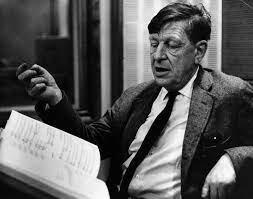
 W.H.Auden 

Wystan Hugh Auden was a British-American poet. Auden's poetry was noted for its stylistic and technical achievement, its engagement with politics, morals, love, and religion, and its variety in tone, form, and content. Some of his best-known poems are about love, such as "Funeral Blues"; on political and social themes, such as "September 1, 1939" and "The Shield of Achilles"; on cultural and psychological themes, such as The Age of Anxiety and on religious themes such as "For the Time Being" and "Horae Canonical".

He was born in York and grew up in and near Birmingham in a professional middle-class family. He attended various English independent schools and studied English at Christ Church, Oxford. After a few months in Berlin in 1928–29, he spent five years teaching in British private preparatory schools, then traveled to Iceland and China to write books about his journeys.

September 1,1939

The poem starts with the line...

I sit in one of the dives 

The poet sits in a dive bar on 52nd Street midtown manhattan New York disappointed in the bad decade of the “low dishonest” 1930s. The decade and recent events have consumed people’s private lives. The odor of death “offends” the night of September 1, 1939.

Future scholars will describe how a cultural problem led from the time of Martin Luther A Theologian to the time of Hitler’s hometown of Linz, a pattern that has driven the German culture into madness. Meanwhile, schoolchildren and the average person know well enough:

“Those to whom evil is done Do evil in return.”

 In the third stanza, Here the poet has given reference to Thucydides a historian. The ancient Greek historian Thucydides knew about dictators and so-called democracy, their “elderly rubbish” of arguments that enable the dictator to cause pain, mismanagement, and grief while an apathetic population permits it. It is happening again in 1939.

The “neutral” New York skyscrapers demonstrate the power of “Collective Man” to accomplish great things, but America is in a “euphoric dream” of neutrality as war breaks out in Europe. America looks “out of the mirror” and sees the face of imperialism and the “international wrong.”

Normal people continue their average American days, keeping up the music and keeping on the lights. Though we make ourselves seem comfortable and at home, we are actually “lost in a haunted wood,” like children who are afraid of the dark and “have never been happy or good.”

The most pompous pro-war speeches spouted by “Important Persons” are not as base as our own jealous wish “to be loved alone.” This is a normal error and not just what “mad Nijinsky wrote About Diaghilev” each person selfishly wants what she or he cannot have.

Commuters come from their “conservative dark” families into “the ethical life” of the public sphere, vowing to improve their lives. Meanwhile, “helpless governors” make their “compulsory” political moves now that war has broken out. Do they have any choice? They seem deaf to advise and unable to speak for those who have no voice.

Yet, all the poet has is his voice, which can expose the lie of neutrality rhetoric and the romanticism of the “man-in-the-street,” who goes along with the authorities and enjoys his “sensual” pleasures. To the poet, there is no “State,” but we are all interconnected and rely on each other. That is, “We must love one another or die.” While the world slumbers, flashes of hope come from “the Just,” exchanging their messages. The poet seeks to be among them, human all the same, troubled by despair but still holding up “an affirming flame.”

The summary video of September 1, 1939 


Epitaph on Tyrant

What is Tyrant?

A cruel and oppressive Ruler. Over here Tyrant is connected to Adolf Hitler.

Tyrant = Brutal Dictator


Epitaph = Tombstone

The epitaph on tyrant's simple meaning is Tombstone of a Brutal Dictator.

Perfection, of a kind, was what he was after,
And the poetry he invented was easy to understand;
He knew human folly like the back of his hand,
And was greatly interested in armies and fleets;
When he laughed, respectable senators burst with laughter,
And when he cried the little children died in the streets.

Here is our professor's lecture on Epitaph on Tyrant,

Wyston Hughes Auden, or WH Auden, was a British poet, often considered by critics to be one of the best England has ever produced. Auden’s work is known, not only for its remarkable poetic caliber and craftsmanship but also for his skillful portrayal of myriad themes- ranging from the political, social, ethical, to the moral and even the individual.
One of Auden’s best-known poems and written, interestingly when Adolf Hitler was at the peak of his power in Europe, is a short, six-line piece entitled- “Epitaph on a Tyrant.”


Trojan War

The Trojan War was a war between the Greeks (Achaeans) and the city of Troy. This all happened after Paris of Troy took Helen from her husba...